

A painting rarely decorates a wall in India; it records history. Across four centuries and very different worlds of patronage, artists captured curiosity about nature, regional identity, devotion, colonial encounters, and India’s changing ideas. Six works, in particular, reward a closer look and a journey to see them.
Mughal Miniature: A Court That Looked Closely
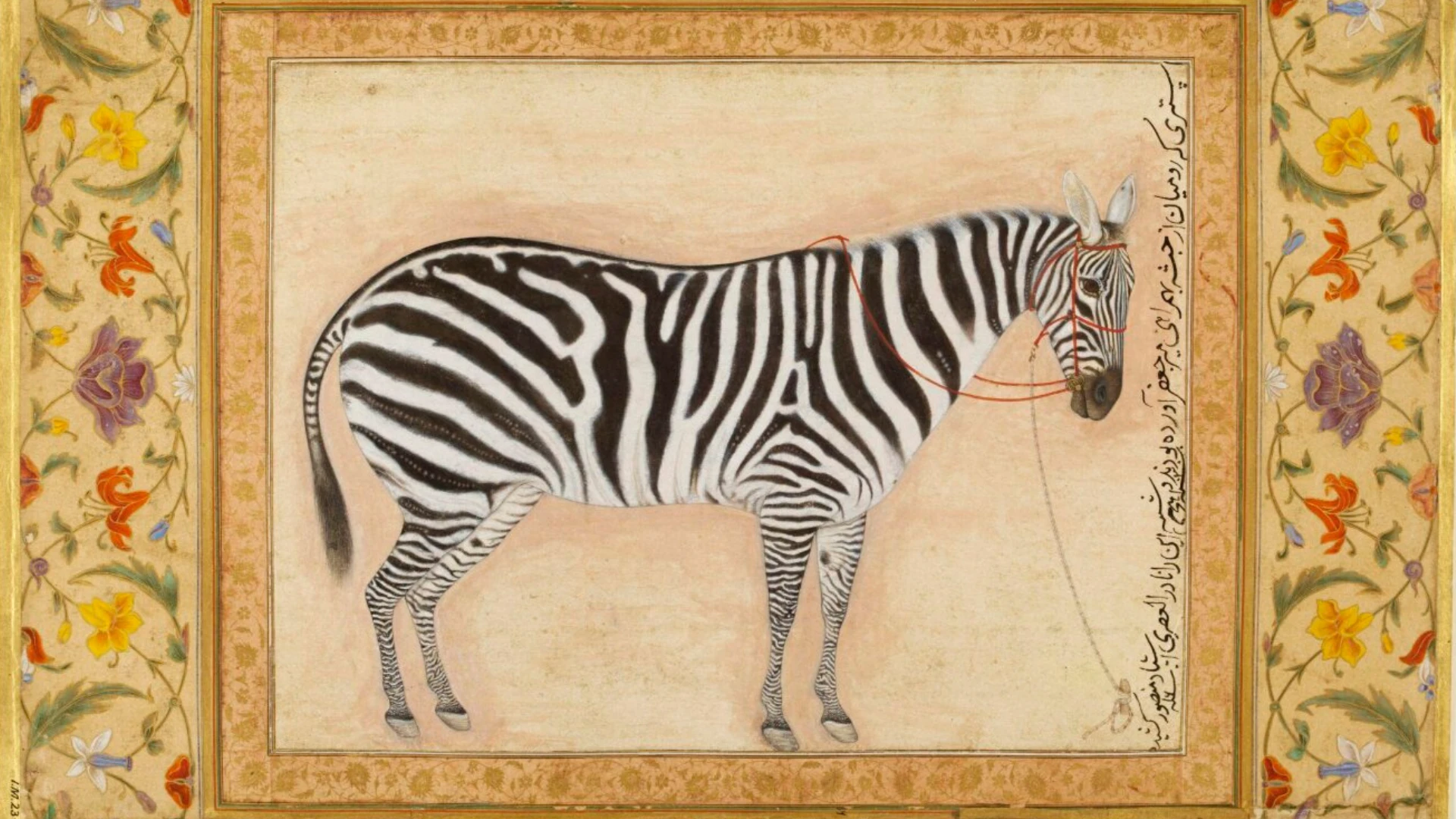
In 1621, an African zebra arrived at Emperor Jahangir’s court, brought from Ethiopia by a delegation that included Turkish traders. Jahangir recorded his surprise at an animal he had never seen before and commissioned his celebrated court artist Ustad Mansur to paint it. The resulting work, now in London’s V&A, is remarkably precise: every stripe, hoof, and contour carefully observed.
Where to see it: The actual zebra painting is in London’s V&A, but Mansur’s work can be encountered in India too. The Indian Museum in Kolkata holds his signed studies of a Siberian crane and a Bengal florican. The National Museum in New Delhi has nearly 17,000 paintings across its miniature collections, including Mughal works such as a portrait of Jahangir holding an image of the Madonna.
Rajput Painting: From Mewar to Kishangarh
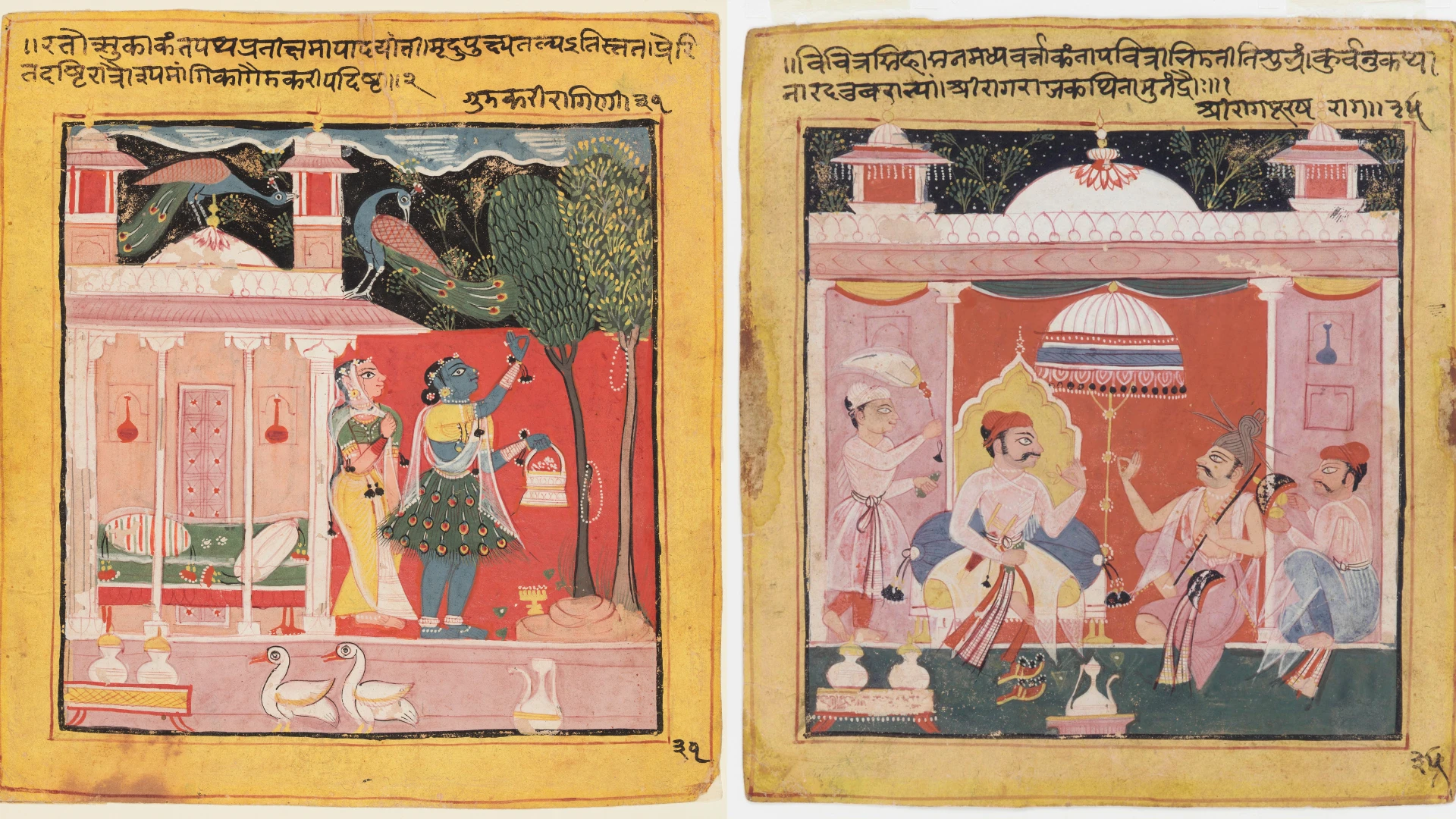
The 1605 Chawand Ragamala – a series of paintings inspired by Indian musical modes- is among the earliest dated works of the Mewar painting tradition. Painted by Nasiruddin at Chawand, where the Mewar court had retreated during its conflict with the Mughals, the series uses strong color, simplified forms, and an intense sense of rhythm. Its visual language is distinctly its own, while also expressing the exchanges between Rajput and Mughal ateliers that influenced Indian court painting.
At Kishangarh, another Rajput court developed a very different visual ideal. During the reign of the poet-ruler Sawant Singh, paintings associated with the celebrated court artist Nihal Chand transformed Bani Thani, a singer and poet associated with the court, into an idealized Radha, with elongated eyes, arched brows, and a nearly otherworldly delicacy. The image became one of the most recognizable in Indian miniature painting.
Where to see them: The City Palace Museum in Udaipur holds around 1,800 Mewar paintings, including Tara’s 1850 Maharana Sarup Singh and His Courtiers on Elephants Celebrating the Festival of Holi. Bani Thani is in the National Museum, New Delhi, alongside major Mughal and other miniature traditions.
Pahari Painting: Devotion in the Hills
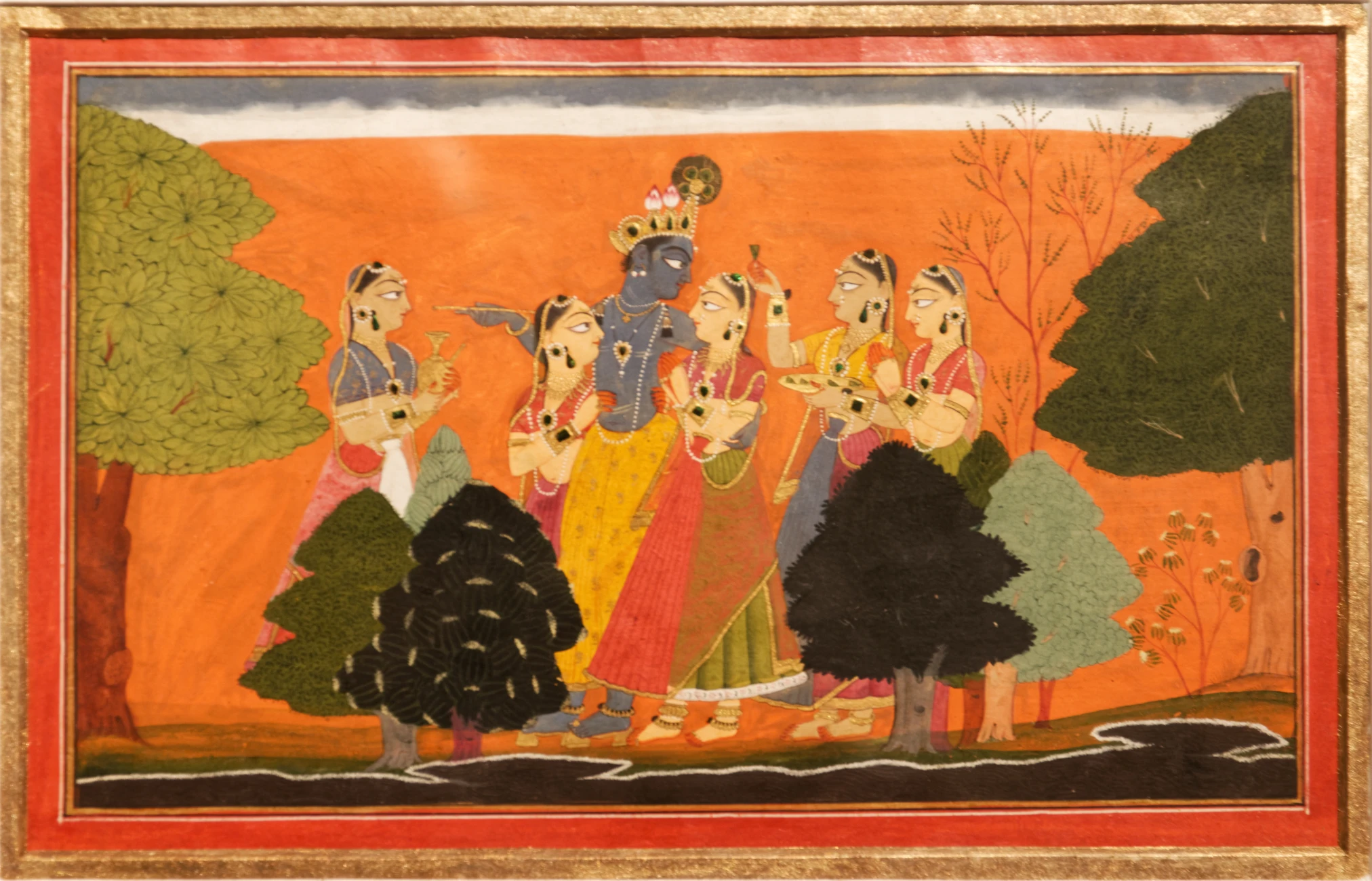
In the Himalayan foothill kingdoms, Pahari painting developed a lyrical language around poetry, devotion, and landscape. Artists at Basohli, Guler, and Kangra repeatedly returned to the stories of Radha and Krishna, illustrating works such as Jayadeva’s Gita Govinda and the Baramasa, a poetic cycle centered on the twelve months of the year.
One of the most remarkable early examples is Manaku’s Krishna Dallying with Cowherd
Maidens, painted in 1730 in the Basohli style. Based on the Gita Govinda, it places Krishna among the gopis, or cowherd women, against a brilliant red ground, with every figure and gesture carefully arranged. It is an early example of the highly literary and devotional painting that would thrive across the Pahari courts.
Where to see it: Manaku’s painting is in the National Museum, New Delhi. For a broader understanding of Pahari painting, the Bhuri Singh Museum in Chamba, Himachal Pradesh, displays important works from Basohli, Chamba, Guler, and Kangra. At the same time, the Maharaja Sansar Chand Museum near Kangra Fort in Himachal Pradesh offers another perspective on the tradition and its most important 18th-century patron.
Company Painting: An Empire’s Field Notes
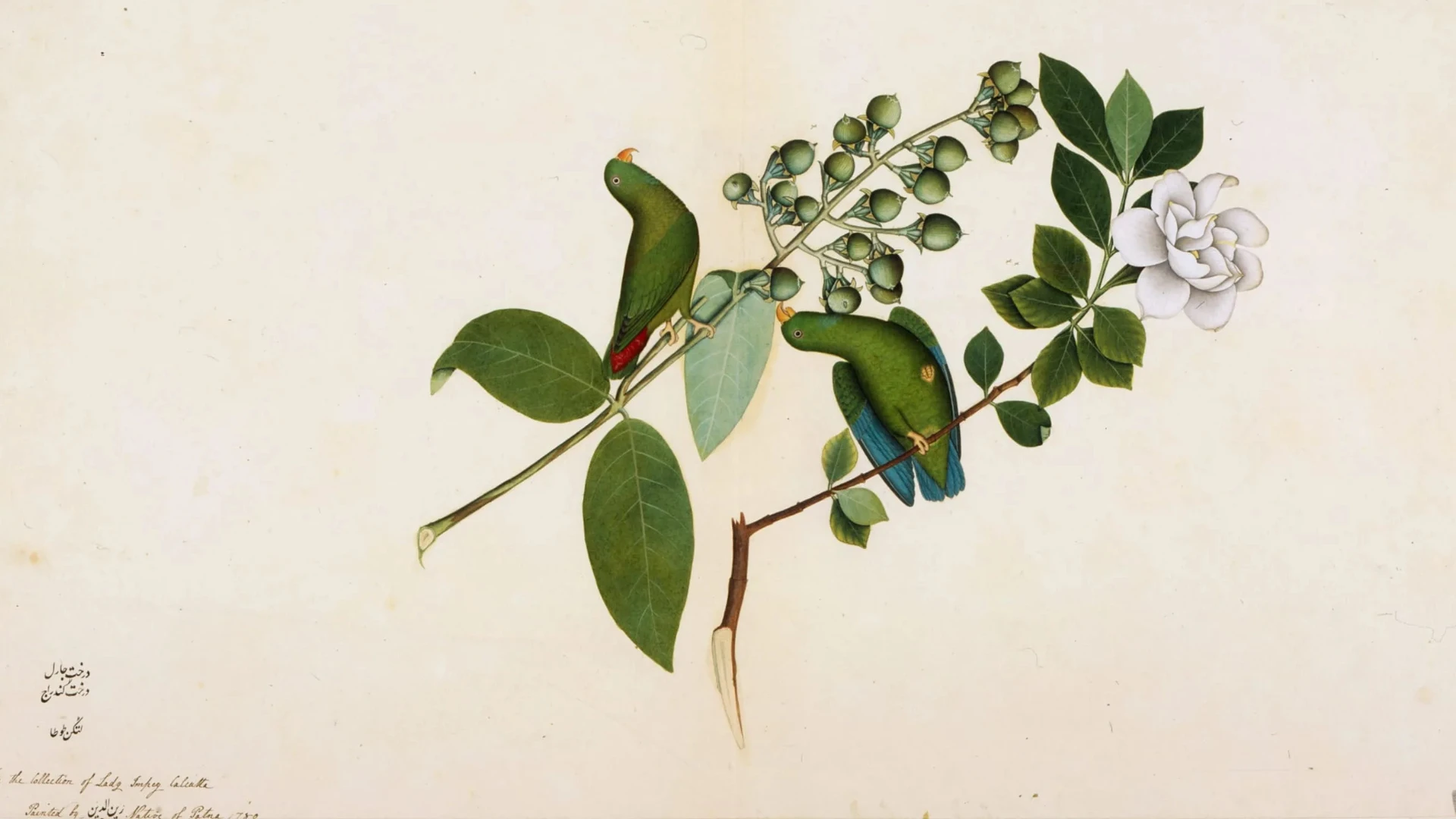
By the late 1700s, Indian artists working in established courtly traditions found new patrons among officials and families connected to the East India Company. In Calcutta, Patna and Lucknow, artists produced detailed studies of birds, plants, animals and people for European collectors and naturalists. Among the best known was Shaikh Zain al-Din, whose Mughal-trained technique was adapted to the growing European interest in natural history.
The result was a distinctly hybrid form of painting: Indian artistic skill responding to new patrons, new purposes and new ideas about how the natural world should be recorded.
Where to see it: The Indian Museum in Kolkata displays Company paintings alongside Mughal, Rajasthani, Deccan and Pahari works in its Paintings Gallery. Established in 1814, the museum grew from the scientific and collecting activities of the Asiatic Society, making it an especially fitting place to explore how colonial collecting, natural history, and Indian painting became intertwined.
Raja Ravi Varma: When European Technique Met Indian Myth
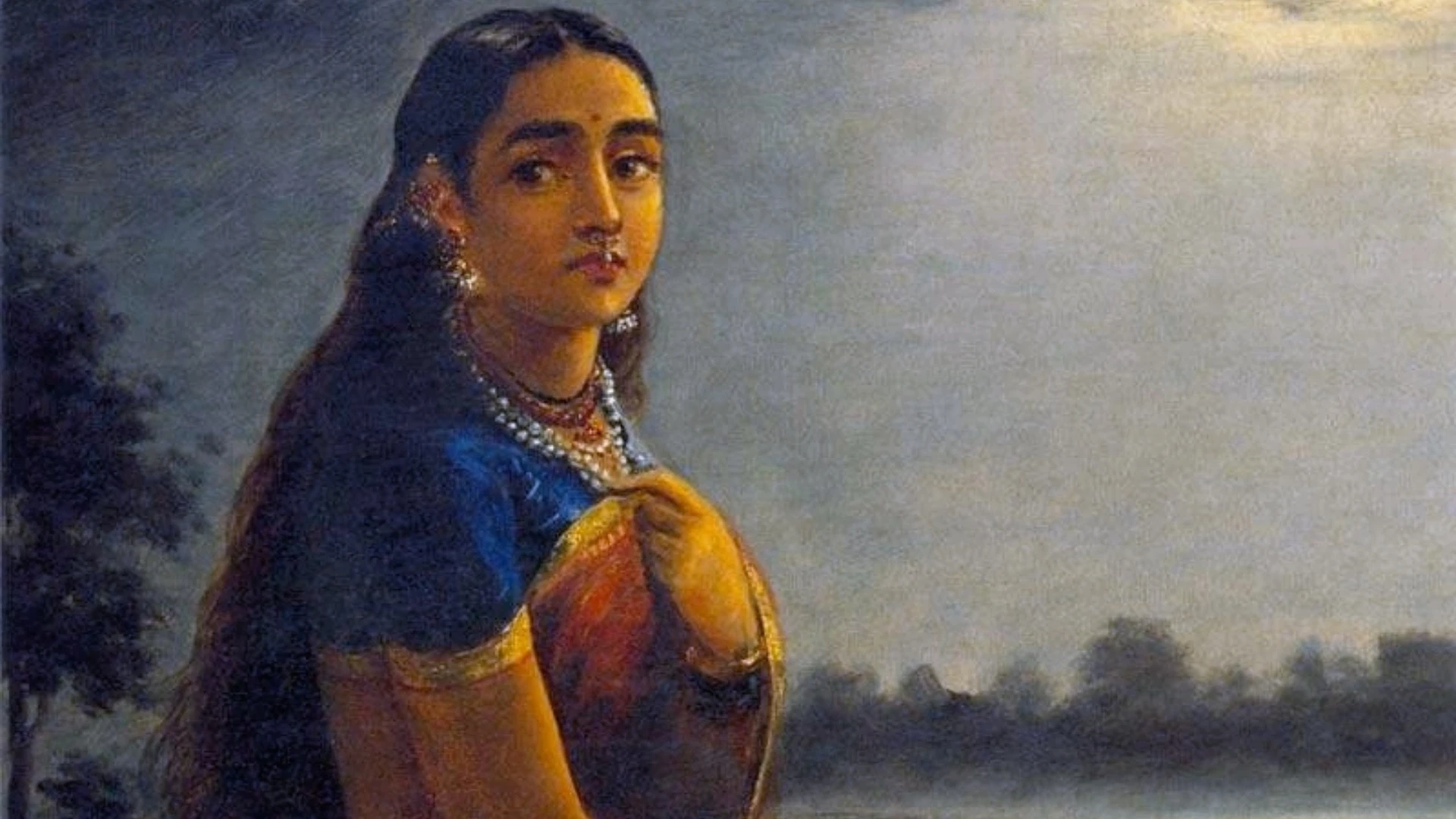
Kerala-born Raja Ravi Varma (1848–1906) became one of the most influential Indian painters, combining European academic naturalism with Indian subjects. He brought oil painting’s modeling, depth, and attention to light to images of Hindu gods, epic heroines, and women from his own world. The precision might be extraordinary: in one of his portraits, the jewelry is rendered finely enough to identify the type of pearls.
Lady in Moonlight, in the National Gallery of Modern Art, New Delhi, reflects another side of his work. The painting shows a woman beside glimmering water, with boats and trees flowing into the night. His younger brother, Raja Raja Varma, was an important collaborator, particularly in landscape; the brothers were known to take night boat rides, observing moonlight and reflections before translating them onto canvas.
Varma later took his art outside the court and gallery. In 1894, he established a lithographic press near Bombay, using German machinery to produce affordable oleographs of his mythological paintings. These images allowed his versions of Hindu deities and epic figures to reach homes far beyond India’s royal courts and wealthy patrons.
Where to see it: Lady in Moonlight is in the collection of the National Gallery of Modern Art, New Delhi, housed in Jaipur House near India Gate.
Modern India: Finding a New Visual Language
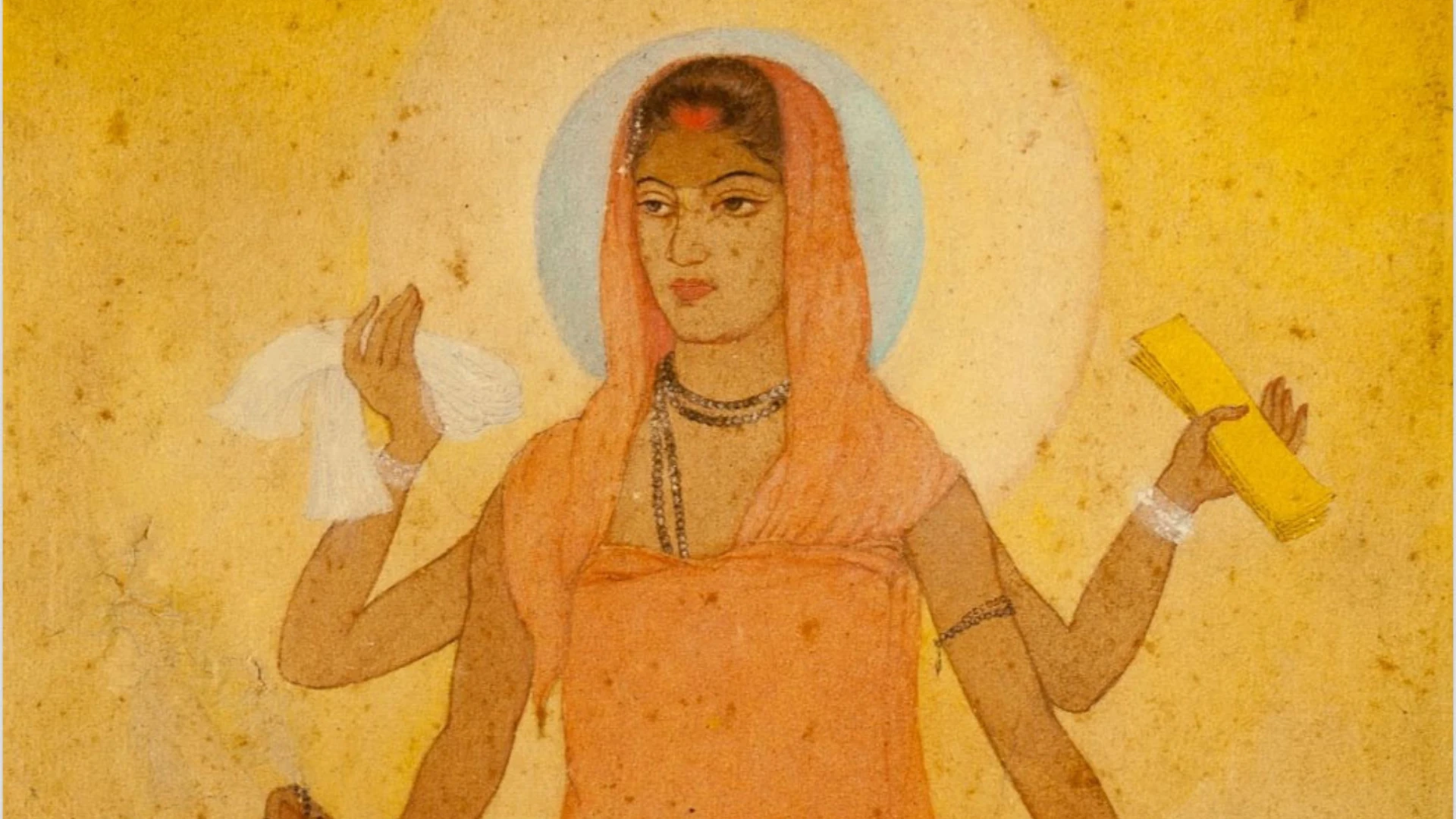
In 1905, amid the Swadeshi movement, a campaign to support Indian goods and resist British rule, Abanindranath Tagore painted Bharat Mata, or Mother India: a saffron-robed woman carrying rice, cloth, a manuscript, and prayer beads. Rather than depict a politician, battlefield or literal map of India, Tagore represented the nation through an allegorical figure drawing on devotional imagery. The painting became one of the most recognizable visual expressions of Indian nationalism.
Decades later, artists of the Progressive Artists’ Group, including M. F. Husain, approached Indian subjects through the language of modernism. Husain returned repeatedly to the horse, using its powerful, simplified form as a vehicle for movement and emotion. His Mother Teresa, painted in 1988, represents her without a face, cradling an older man within the folds of her sari. Husain associated this facelessness with the memory of his own mother, who died when he was a child.
Where to see them: Bharat Mata is in the collection of Victoria Memorial, Kolkata, which holds more than 5,000 Bengal School paintings. The National Gallery of Modern Art in New Delhi holds Husain works including Horse (1967), Zameen, and Mother Teresa.
Six paintings, six ways of seeing India: imperial curiosity, regional identity, devotional storytelling, colonial exchange, the meeting of Indian and European artistic traditions, and the making of a modern national imagination.
Curious to see them in person? Write to us at sales@greavestours.com, and we’ll build a journey around museums, collections, and the places which shaped the art.


